Posted in Stephen King, Uncategorized

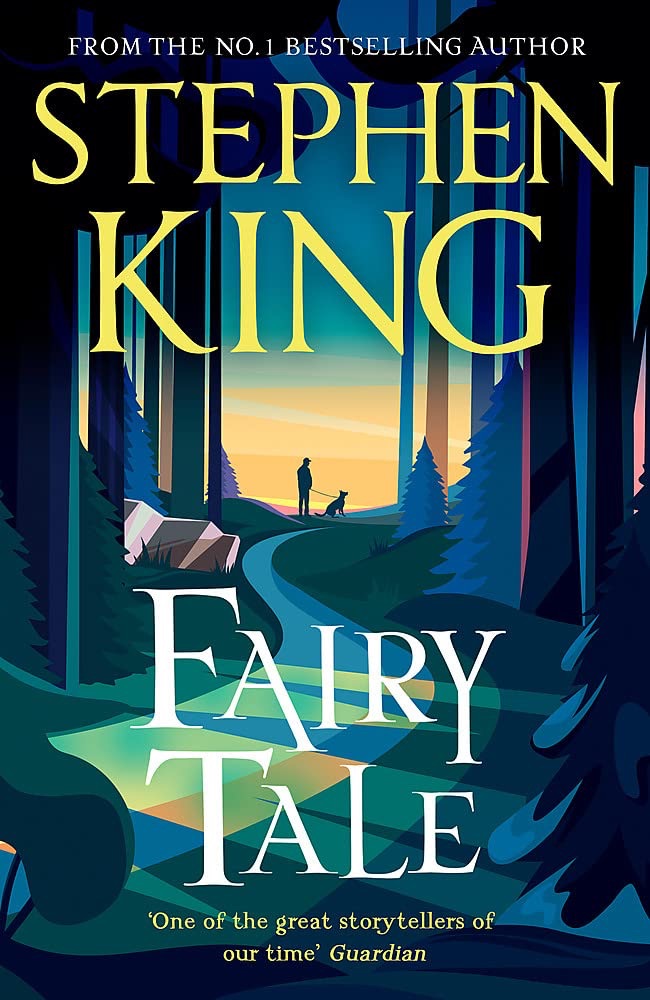
Fairy Tale by Stephen King

SYNOPSIS:

Legendary storyteller Stephen King goes deep into the well of his imagination in this spellbinding novel about a seventeen-year-old boy who inherits the keys to a parallel world where good and evil are at war, and the stakes could not be higher—for their world or ours.
A story as old as myth, and as startling and iconic as the rest of King’s work, Fairy Tale is about an ordinary guy forced into the hero’s role by circumstance, and it is both spectacularly suspenseful and satisfying.

REVIEW:

After “IT”, I believe this is the second book written by Stephen King that makes me care about the characters almost as much as I’d care about real people. I absolutely love those novels where a friendship flourishes in such a beautiful and heartwarming way as it does IT or Fairy Tale. This is probably the reason I loved the first part of the book more than the second, although I honestly don’t have any complaints about that second half either. It just wasn’t as touching, but it did compensate through action and some suspense here and there.

I think Fairy Tale is one of those books for readers who are already declared fans of the author. It’s good, but definitely not… wow. I wouldn’t recommend it to someone who never read any of King‘s novels, as there are better options to start with.

I mentioned already how much I loved the relationship that formed between Charlie and Mr. Bowdich and, of course, Radar. I know, I know, it was a bit unrealistic since I can’t imagine any 17 years old kid being as mature and responsible as Charlie, but that didn’t stop me from loving those chapters. I mean.. if you can accept and enjoy the existence of parallel worlds, giant cockroaches, telepathic mermaids and ancient evil monsters, why would you be bothered by an impossibly kind boy, no?

And as unrealistic Charlie’s behaviour might be, the response and actions of Mr. Bowdich are the most credible and relatable aspect of the story. I think I’ve gone through that part of the book so eagerly exactly because I wished so much for Mr. Bowdich to receive some goodness. You can sense all the pain and loneliness that a lifetime of isolation left on his heart. It’s easy to empathise with his yearning and his relief to hand over to Charlie both the responsibility of the hidden world and of his most beloved soul, Radar. Especially after what were probably years of fear because it was impossible for him to come up with a backup plan.

The second part of the story moves into a parallel universe, where all popular myths and tales from childhood seem to combine into one storyline where Charlie becomes the hero. You already know it’s a fairytale, so the tension is somehow tamed by the unwritten rule that there will definitely be a happy ending in the last pages of the story. Still, that doesn’t mean the story becomes boring at any point. King adds enough surprise elements to keep you hooked and his world building is at the same level as it is in any of his popular novels. I can still close my eyes and visualise the narrow streets of Lilimar, the depths of Maleen or the desertness of Empis.

I think from the second half until the end, the book could be described as… satisfying. I saw some reviews where readers were complaining that they completely lost interest after Charlie stepped into Empis. I might just have a soft spot for great friendships in books, so for me, that first half of the story was enough to make it worth it.

From what I read, the book is already in progress to be turned into a mini TV series, so it might be a good idea to read it before watching that.
Posted in Jessica Knoll, Uncategorized

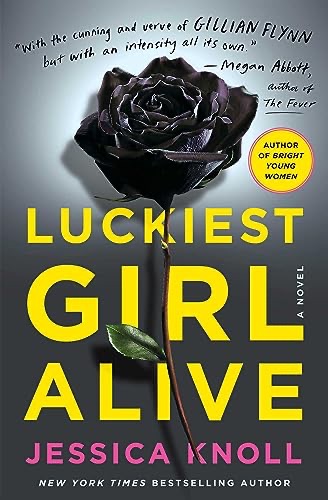
Luckiest Girl Alive by Jessica Knoll

SYNOPSIS:

Her perfect life is a perfect lie.

As a teenager at the prestigious Bradley School, Ani FaNelli endured a shocking, public humiliation that left her desperate to reinvent herself.

Now, with a glamorous job, expensive wardrobe, and handsome blue blood fiancé, she’s this close to living the perfect life she’s worked so hard to achieve.

But Ani has a secret. There’s something else buried in her past that still haunts her, something private and painful that threatens to bubble to the surface and destroy everything.

With a singular voice and twists you won’t see coming, Luckiest Girl Alive explores the unbearable pressure that so many women feel to “have it all” and introduces a heroine whose sharp edges and cutthroat ambition have been protecting a scandalous truth, and a heart that’s bigger than it first appears. The question remains: will breaking her silence destroy all that she has worked for-or, will it at long last, set Ani free?

REVIEW:

I’m very rarely bothered by the style of a book and I’m usually too captivated by the story in order to notice any possible errors or any… stylistic issues. But my god, did Luckiest Girl Alive, bore me with those long, long sentences. There’s description after description for literally every single thing, important or not. Moreover, each phrase contains several metaphors and “quirky” little comparisons. It’s getting so tiring after a while that I’d just start reading a sentence, lose interest midway and skip the rest.

Anyway, I persisted and after a while I managed to get used to the style and just focus on the storyline. Or perhaps the author just changed her style? I don’t even know anymore honestly.

The protagonist couldn’t be more annoying in the beginning. She’s not just intentionally bitchy, but she wants everyone to know what a mean person she is. Page after page, every action and sentence just screams: “Look at me how rich, important and cool I am!”. Later it becomes obvious that it’s just a protection mechanism for her to deal with her past. The more vulnerable she becomes, the more you forgive her shallowness from the beginning.

The story begins to become stronger and more disturbing as you read on and at some point it’s easy to forget all the negative aspects that you observed in the first few chapters.

You start to actually love it and be captivated by it and then.. bam! You get this new age ending where she made peace with herself, with everyone around her and with her past and she’s all wise and transformed into a new person who is suddenly not craving for attention and for luxury and for that perfect image that she was dreaming about just months before.

The whole book is just a hot pot of mixed feelings. I didn’t hate it, or at least not all the time, but I can’t say that I liked it either. And despite the fact that I rolled my eyes over and over again… overall it did not actually bore me. I didn’t find it memorable but in the same time, it did keep me hooked enough to finish it in a few days.

And I guess it’s worth giving it a chance, because not a lot of books manage to trigger such confusing reactions. Plus, the fact that they made a movie out of it kind of tells you it’s not really a waste of time.

Posted in Nikki Erlick, Uncategorized

The Measure by Nikki Erlick

SYNOPSIS:

Instant New York Times Bestseller!

A luminous, spirit-lifting blockbuster that asks: would you choose to find out the length of your life?

Eight ordinary people. One extraordinary choice. It seems like any other day. You wake up, drink a cup of coffee, and head out. But today, when you open your front door, waiting for you is a small wooden box. The contents of this mysterious box tells you the exact number of years you will live. From suburban doorsteps to desert tents, every person on every continent receives the same box. In an instant, the world is thrust into a collective frenzy. Where did these boxes come from? What do they mean? Is there truth to what they promise? As society comes together and pulls apart, everyone faces the same shocking choice:

Do they wish to know how long they’ll live? And, if so, what will they do with that knowledge? The Measure charts the dawn of this new world through an unforgettable cast of characters whose decisions and fates interweave with one another: best friends whose dreams are forever entwined, pen pals finding refuge in the unknown, a couple who thought they didn’t have to rush, a doctor who cannot save himself, and a politician whose box becomes the powder keg that ultimately changes everything. Enchanting and deeply uplifting, The Measure is an ambitious, invigorating story about family, friendship, hope, and destiny that encourages us to live life to the fullest.

REVIEW:

This book reminded me of World War Z (the book, not that terribly disappointing movie) and that was one of my favourite stories ever! I loved The Measure for the same reasons I loved WWZ: both writers take an impossible idea and just ask “What would the whole world do if this crazy thing happened?”
And this is how this kind of novels are born, analysing the reactions of different countries based on our current reality and the state of the world.


There is no explanation on why that major thing happened. Only suppositions that are never proven real, so everyone just has to take things as they come and deal with them as best as they can. And honestly, there was not a second when I wished for a different storyline. Personally, I care less about the reason why any sort of mystery happens and more about the reaction that follows it.


There is no hero. No main characters, even though the story is narated through the eyes of different characters. The Measure does have fewer characters than WWZ so they do become more significant and it’s easier to become interested in their destinies. But I still feel like their purpose there is to lay the bigger story and not to limit the reading experience only to their own little roles.


I think it would have been interesting if the author treated the story on a larger scale, showing the reactions of more countries. But I might be biased here because of my love of WWZ and I just dream of a reacreation of that.
Still, Nikki Erlick did a great job portraying exactly how different societies would react to… basically anything unexpected or completely out of ordinary. There is no better illustration of how everything can and will be turned into a game of power, interests and money by the higher classes, while the regular people are the ones dealing with the injustice, pain and fighting for the greater good.


Loved the idea, loved the execution! It might not completely blow your mind, especially since it lacks a clear explanation about the origin or purpose of the boxes. But it will definitely provoke your mind over and over again with each chapter that comes.

Posted in Uncategorized

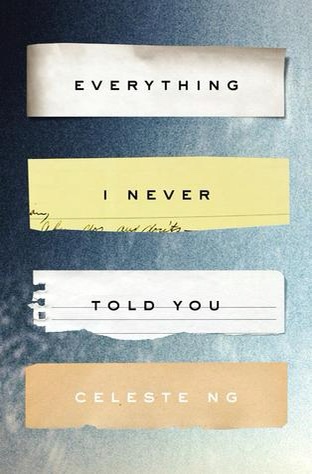
Everything I Never Told You by Celeste Ng

SYNOPSIS:

Lydia is dead. But they don’t know this yet.

So begins this exquisite novel about a Chinese American family living in 1970s small-town Ohio. Lydia is the favorite child of Marilyn and James Lee, and her parents are determined that she will fulfill the dreams they were unable to pursue. But when Lydia’s body is found in the local lake, the delicate balancing act that has been keeping the Lee family together is destroyed, tumbling them into chaos.

A profoundly moving story of family, secrets, and longing, Everything I Never Told You is both a gripping page-turner and a sensitive family portrait, uncovering the ways in which mothers and daughters, fathers and sons, and husbands and wives struggle, all their lives, to understand one another.

REVIEW:

From the first pages of Everything I Never Told You, there’s such a thick layer of sadness enclosing the whole atmosphere that even the happier memories tend to float in a grayish filter. Nothing is bright, nothing really shines, every little joy being somehow washed by wave after wave of sorrow, unspoken regrets and more than anything, longing. Longing to be either yourself or someone else, to fit in or to be unique, longing for love, for dreams, for things to be different or exactly the same, for freedom or belonging. Longing for all the things that make us human and for all the things that make us different.

I haven’t really stopped reading once I learned how to, as a child. Not during teenage years, not during adulthood. But I realized now, while reading Everything I Never Told You, that it’s been more than a decade maybe since a book offered me some sort of… revelation. I cannot find a better word. During the years of adolescence, when I was questioning everything and looking for answers, I searched for and found books after books that would allow me to form my thoughts, that indirectly shaped the way I think, that made my mind buzz with ideas. But since then, somehow reading turned from thirst of knowledge into entertainment only instead.

And I can’t remember discovering any more bewildering novels. Novels that would shake me, that would suddenly make me grasp an idea that feels like it’s completely new and in the same time, like it’s been always floating there, under a shallow layer, so close, but always out of reach.

And although the whole novel of Celeste Ng is somehow bursting of examples, one insignificant scene was the one opening my eyes about this: how hard we hit the ones we love the most, when we are furious on anything else besides them. How in that explosive moment, we don’t care how exposed, innocent and hurt they are and nothing else matters besides our own anger. And how poisonous is the mix of guilt, fury and pride that forms in the seconds after, how it swells in your throat so much that it hurts and doesn’t let you breathe or swallow. We never learn that the guilt won’t ever disappear, even if, perhaps, the memories themselves might fade with time. In that impulse, we always forget that the guilt will survive even after the people won’t be there anymore, that the guilt will hover around, surrounding and intoxicating any recollections, outbalancing any facts or feelings, no matter how much we try to ignore it.

As cheesy as it may sound, I feel grateful for reading this book and amazed by the author’s ability to paint such raw images, to make me feel such diametrically opposed feelings in the same time, to make me sense each character’s pool of grief, regrets, silences and vulnerabilities. I did not read Everything I Never Told You. I felt it, I lived it. There weren’t many things to make me connect with the characters or to identify myself with their own stories, but the author’s talent makes you empathize with all of them, transfering you their feelings as if they were your own.

Posted in Stephen Graham Jones, Uncategorized

The Only Good Indians by Stephen Graham Jones

SYNOPSIS:

The creeping horror of Paul Tremblay meets Tommy Orange’s There There in a dark novel of revenge, cultural identity, and the cost of breaking from tradition in this latest novel from the Jordan Peele of horror literature, Stephen Graham Jones.

Seamlessly blending classic horror and a dramatic narrative with sharp social commentary, The Only Good Indians follows four American Indian men after a disturbing event from their youth puts them in a desperate struggle for their lives. Tracked by an entity bent on revenge, these childhood friends are helpless as the culture and traditions they left behind catch up to them in a violent, vengeful way.

REVIEW:

I have no idea how exactly to explain my initial reaction to this book. I’ve read countless books in English, which is not my mother tongue, I live in an English speaking country and use the language every day, but once I started The Only Good Indians I felt like I don’t understand a word, like I’m reading in Chinese. After a few pages, I even passed the book to my SO to make sure that my brain didn’t suddenly lose its ability to read or to understand a sentence. And no, it clearly wasn’t me, it was the writing. I still have no idea what exactly happened there, what the issue was. Each word had a meaning, but somehow, put together, they just didn’t have any sense. Somehow, after a few chapters, things sort of went back to normal and the phrasing was smoother. Despite that, the book still didn’t catch me and I just wanted to finish it faster and be done with it.

The storyline is definitely original and not one of the tipical horror plots, but that’s pretty much the only good thing I can say about it. I’ve seen so many excited reactions about this novel, I saw it in so many 2020 tops. It’s not even the fact that my expectations weren’t met. I wasn’t just disappointed, I simply disliked everything about it. The characters weren’t interesting, I couldn’t sympathize with any of them, their actions seemed illogical half of the time, the storyline wasn’t catchy, the plot didn’t make my pulse jump or give me the feeling that I’m reading a horror. In addition, I feel like the author tried so much to signal that this is a story about native indians that it became repetitive and annoying.

Considering that so many readers gave positive reviews and I’m in minority here, I’m just going to assume this was not a story for me, but it can definitely be for somebody else. So in case you’re feeling tempted to give it a try, don’t let my opinion discourage you from reading it.