Posted in Seishi Yokomizo

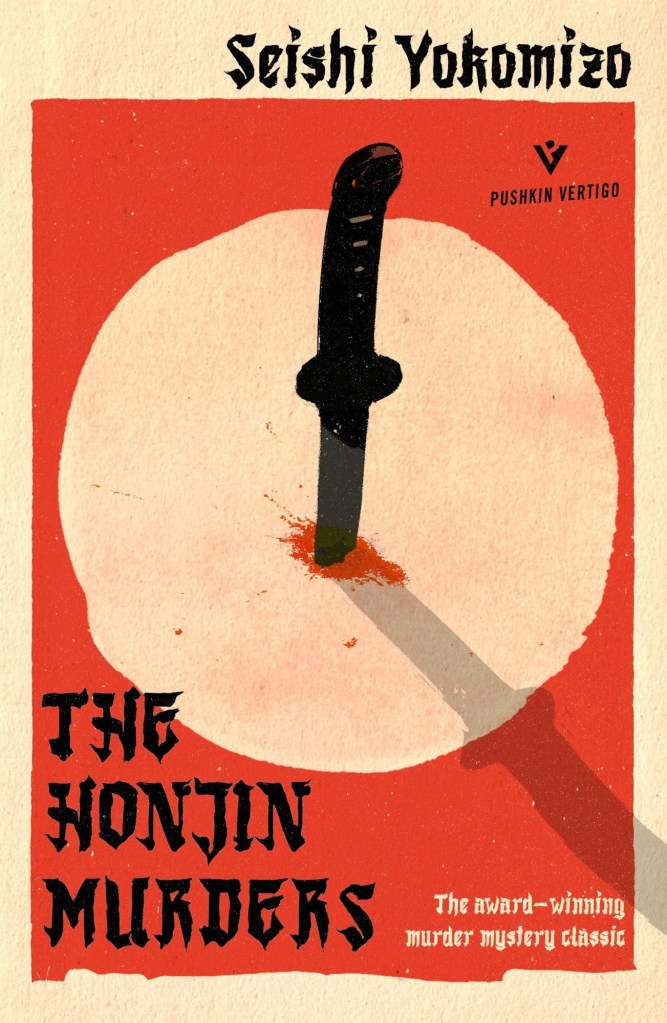
The Honjin Murders (Detective Kosuke Kindaichi #1) by Seishi Yokomizo

SYNOPSIS:

One of Japan’s greatest classic murder mysteries, introducing their best loved detective.

In the winter of 1937, the village of Okamura is abuzz with excitement over the forthcoming wedding of a son of the grand Ichiyanagi family. But amid the gossip over the approaching festivities, there is also a worrying rumour – it seems a sinister masked man has been asking questions around the village.

Then, on the night of the wedding, the Ichiyanagi household are woken by a terrible scream, followed by the sound of eerie music. Death has come to Okamura, leaving no trace but a bloody samurai sword, thrust into the pristine snow outside the house. Soon, amateur detective Kosuke Kindaichi is on the scene to investigate what will become a legendary murder case, but can this scruffy sleuth solve a seemingly impossible crime?

REVIEW:

I don’t recall ever reading a book that explains everything in such an unusual way as The Honjin Murders. Rather than reading a book, it makes you feel like you’re having a verbal conversation with a person who is narrating a story. And that might sound like an interesting choice of style, but unfortunately, the narrator keeps reminding you certain details, over explaining technical features and inserting their personal opinions in between the facts. This exaggerated orality bothered me for a while because being spoon fed all the details steals some of the mystery from something that should be a mystery novel. After 4-5 chapters, the style tends to change a bit and we only get a reminder of that weird descriptive style now and then.

Now for the good parts. What I normally heavily dislike in any detective books is that the mystery gets suddenly and rapidly solved in the last chapter and we are only left with a quick epilogue. It happened to me pretty often to remember the whole action of a book but to forget almost completely who was the murderer and how the story ended exactly because of this reason. In The Honjin Murders, I absolutely loved the fact that the mystery is solved maybe a quarter before the ending. This way, my brain has time to let the conclusion slowly settle and make the entire story more memorable.

The murder itself is as brilliant as the solving of the puzzle. Both the detective and the criminal are having the same intelectual potential, so the suspense stays at a high level constantly.

Before the protagonist is introduced, the regular police is in charge of the case and the author doesn’t rush that part of the story. This is one aspect that I did not encounter often in other murder mysteries where we are acquainted with a genius detective. I appreciated that the author doesn’t try to minimise the capabilities of the normal police and guides us through the regular steps of an investigation, before finally bringing on the scene the main actor. Even then, the police is still heavily involved and both parties are relying and trusting each other.

The story was intriguing enough and I am probably going to continue the series at some point. I heard that some of the next books are better than this first one so I think it’s worth finding out if that’s true or not. Moreover, it’s probably the first time when I read a Japanese crime author and I’m still curious to discover more of his work, even if this first novel did not really blow my mind.

Posted in Zoulfa Katouh

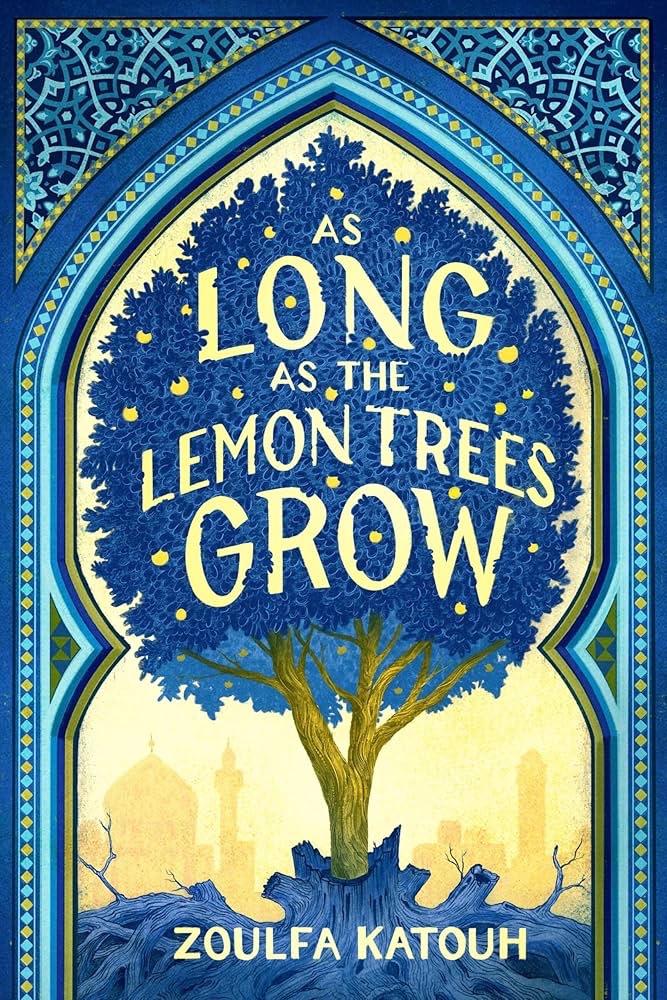
As Long As The Lemon Trees Grow by Zoulfa Katouh

SYNOPSIS:

Salama Kassab was a pharmacy student when the cries for freedom broke out in Syria. She still had her parents and her big brother; she still had her home. She had a normal teenager’s life.

Now Salama volunteers at a hospital in Homs, helping the wounded who flood through the doors daily. Secretly, though, she is desperate to find a way out of her beloved country before her sister-in-law, Layla, gives birth. So desperate, that she has manifested a physical embodiment of her fear in the form of her imagined companion, Khawf, who haunts her every move in an effort to keep her safe.

But even with Khawf pressing her to leave, Salama is torn between her loyalty to her country and her conviction to survive. Salama must contend with bullets and bombs, military assaults, and her shifting sense of morality before she might finally breathe free. And when she crosses paths with the boy she was supposed to meet one fateful day, she starts to doubt her resolve in leaving home at all.

Soon, Salama must learn to see the events around her for what they truly are—not a war, but a revolution—and decide how she, too, will cry for Syria’s freedom.

REVIEW:

Since I was a kid, my reading pattern is loving a genre for a few years, until my brain is oversaturated with it and then moving on to another genre that I’ll be addicted to, for the next few years. Rinse and repeat, throughout my whole life.

I long forgotten about YA books for the last decade or so. And I kind of though that at this age now, I would probably get dizzy from rolling my eyes at the usual teen drama.

However, As Long As The Lemon Trees Grow gave me a very clear reminder why I loved YA for so many years. Besides the main storyline, which I’ll discuss later, I couldn’t help myself from smiling because of the young love story within it. I was surprised to see that I’m reading those parts with the same delight as 15 years ago.

But As Long As The Lemon Trees Grow is definitely way, way more than just a love story. It’s a microscope that looks straight into the cruelty of war and terror and cuts through your heart with every page.

The rest of the world does’t know (…) Syria is just a word to them. But to us, she’s our life.
Syria. Ukraine. Palestine. How many of these names are indeed, just words, for us who are living in safe places. We hear something about a war somewhere, we pity the people of that country and maybe shudder at the thought for a while. But it’s so unbelievably difficult to really understand the enormity of a war. It’s absolutely impossible to imagine that yesterday, those people were living just like us, going to the office, meeting friends in a coffee shop, decorating their new apartment, watering their plants. And today their whole world is in crumbles, their families torn and they can either stay there and wait for an inevitable violent death or pack all what’s left from the rubble in one suitcase and try to run towards a world that does not want them.

There used to be a quote by Warsan Shire circulating online a while back and I feel it tattooed on my heart since the first time I read it. I think it defines more than ever the current state of our world:

later that night
i held an atlas in my lap
ran my fingers across the whole world
and whispered
where does it hurt?

it answered

everywhere

everywhere

everywhere.

Every single time when I reach to any historical fiction I am reminded of the horrors that humans inflicted for centuries over their own kind. And every time I am shocked that we continue to do so, without a single glance in the past, without a trace of mercy. Just cruelty, distruction and unbelievable greed everywhere… And the price? “Your life sliced away from you piece by piece

I read the first half of the book with a mix of sadness, anger and hope. The second half I read it… with my heart in my throat. By the time I finished it, I felt physically exhausted, as if my whole being lived inside the pages. It’s unbelievably how swiftly and subtly the author draws you into the story until your emotions are not yours anymore and they fully entwine with the ones of her characters.

I don’t even have space in my brain now to comment or analyse the characters, the style, all the things that I normally talk about in my reviews. Zoulfa Katouh mirrored all the faces of humanity in her characters, the good and the bad, the kindness and the evil, the fear and the courage. And more impressing is the fact that oftentimes, all those opposite emotions radiate not from different characters but live inside each one of them.

I’m honestly feeling grateful for having had the privilege to read this book, grateful to the author for bringing light about this topic in such a a way. Despite the heaviness, despite all the terror and sorrow that reverberate throughout the pages, you are left with hope at the end of the book. And as she wrote in her Acknowledgments, that was the main purpose of the novel.

Posted in Jesse Q. Sutanto

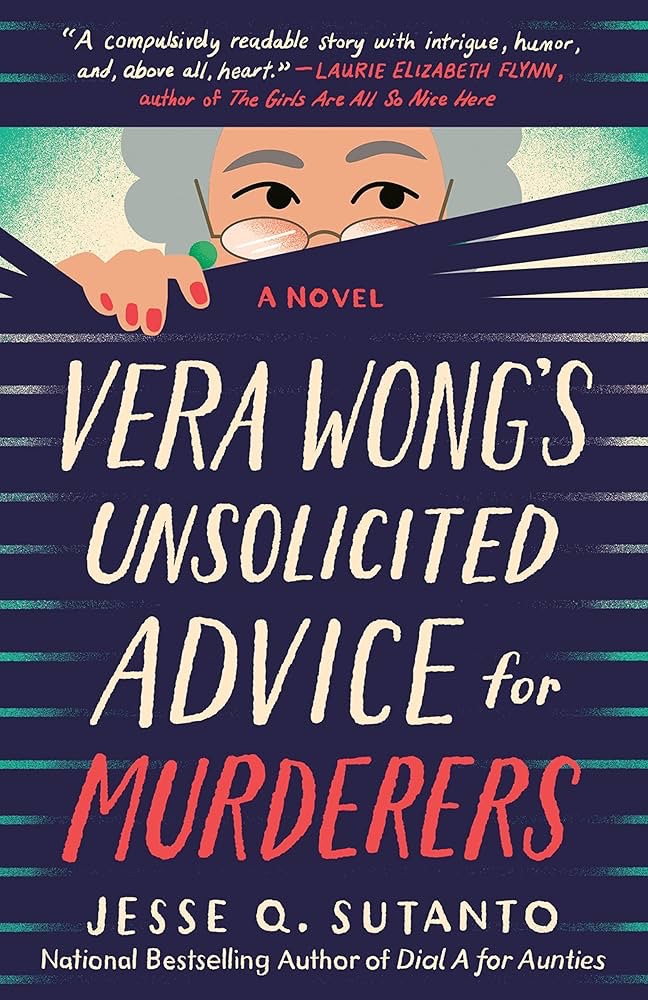
Vera Wong’s Unsolicited Advice for Murderers (Vera Wong #1) by Jesse Q. Sutanto

SYNOPSIS:

Put the kettle on, there’s a mystery brewing… Tea-shop owner. Matchmaker. Detective? Sixty-year-old self-proclaimed tea expert Vera Wong enjoys nothing more than sipping a good cup of Wulong and doing some healthy ‘detective’ work on the internet (AKA checking up on her son to see if he’s dating anybody yet).

But when Vera wakes up one morning to find a dead man in the middle of her tea shop, it’s going to take more than a strong Longjing to fix things. Knowing she’ll do a better job than the police possibly could – because nobody sniffs out a wrongdoing quite like a suspicious Chinese mother with time on her hands – Vera decides it’s down to her to catch the killer. Nobody spills the tea like this amateur sleuth.

REVIEW:

The day I finished this book I bought two other novels by Jesse Q. Sutanto and I’m hunting what else she wrote. I do have a weak spot for books that have this type of nosy old lady as a protagonist so I wasn’t quite surprised that I loved Vera Wong’s Unsolicited Advice For Murderers as much as I did. The fact that the author is also diving into so many different cultures through her characters also added to my delight while reading the book.

It’s been a while since I read Vera Wong’s Unsolicited Advice For Murderers and I’m still unable to find anything I did not like about it. The atmosphere, the mystery, all of the characters and the relationships between them, everything had just the perfect dose of comfort and thrill. I did feel my heart beating equally faster both when the action was becoming more intense and also when anything was threatening a new friendship between the characters.

I love how strong and uplifting the whole story was, despite each character carrying their own problems on their shoulders. Each of them could be crushed under the pressure, but the bonds that form between them empower them equally and lift some of the weight. Not all of it, but just enough to keep them going and to grow stronger with every day that passes. And that’s probably one of the most beautiful things that we see not only in books, but in daily life as well: how humanity is not defined by a multitude of people, but by the relations between them.

I also loved how visual the whole story was, without even using an excessive amount of descriptions. The moment I think about Vera’s teahouse I can envision it clearly, with all her ancient cabinets and windows darkened by time, on the quiet ethnic street with snoopy neighbours. Additionally, the narrative voice definitely has an accent, so it almost felt like I was listening to an audiobook in my head, rather than reading.

Really fun and lovely read! I haven’t checked any GoodReads reviews yet in order to be sure, but I highly doubt anyone could possibly dislike this book. I personally enjoyed every page of it!

Posted in Agatha Christie

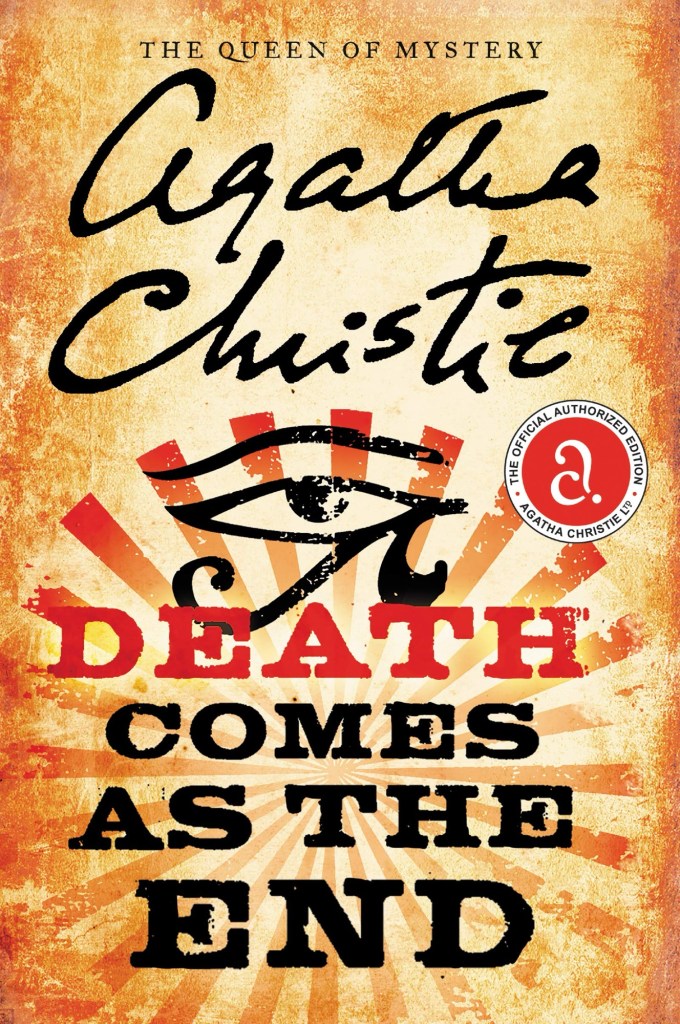
Death Comes As The End by Agatha Christie

SINOPSIS:

In this startling historical mystery, unique in the author’s canon, Agatha Christie presents the puzzle of a deadly mystery at the heart of a dissonant family in ancient Egypt.

Imhotep, wealthy landowner and priest of Thebes, has outraged his sons and daughters by bringing a beautiful concubine into their fold. And the manipulative Nofret has already set about a plan to usurp her rivals’ rightful legacies. When her lifeless body is discovered at the foot of a cliff, Imhotep’s own flesh and blood become the apparent conspirators in her shocking murder.

But vengeance and greed may not be the only motives…

REVIEW:

I’ve gone through hundreds of books throughout my life, from famous one to completely unknown ones, but weirdly, I seem to have skipped few major authors. Agatha Christie is one of them. So I decided to rectify this issue and randomly started with Death Comes As The End.

I’m not sure if it was the best choice for a first reading of this author of if I should have started maybe with one of her more popular novels. Not that I disliked the story, but it was a bit far from what I was expecting.

Death Comes As The End felt kind of like a light, cozy mystery set in an ancient setting. I mean… as “cozy” as it can get, considering the seven murders that take place. Nothing wow, nothing impressive, yet pleasant and catchy enough. It didn’t make me wish to instantly buy all the books written by this author, but in the same time, it’s hard to find anything to dislike in the story. Everything feels just… unremarkable, from the chain of events to the personalities of the characters. The kind of book that you enjoy while reading, but completely forget a week after.

I did appreciate the construction of the characters though. I did not get attached to any of them in particular, I found most of them to be too passive, but I loved how clear and well defined each of them was. I don’t know how to explain it in a better way, but even if you would suddenly forget all their names midway, it would be impossible to get confused about who is who. Their actions and words are perfectly well aligned with their personalities. I encountered the opposite in many many other books and I completely detest when the characters and their voices or behaviours are indistinguishable.

Regarding the mystery itself, I’m never the kind of reader that tries to be a step ahead and guess in advance who the killer is. So as long as the solution is not painstakingly obvious, I’m usually enjoying the story as it goes. This was the case with Death Comes As The End. I probably should have paid more attention to the psychological development of the characters and seen what was coming. Looking back, the changes in their conduct would have been the best clue to follow if I’d be the detective type of reader. But I feel that I did not get the chance to connect with them more because of how inactive most of them were throughout the storyline.

Overall, it was an enjoyable and quick read, but definitely not the type of book that would make me want to read even the grocery list of that author. If I’ll return to Agatha Christie, it will definitely be because of her name and not because of this particular story.

Posted in Jessica Knoll, Uncategorized

Luckiest Girl Alive by Jessica Knoll

SYNOPSIS:

Her perfect life is a perfect lie.

As a teenager at the prestigious Bradley School, Ani FaNelli endured a shocking, public humiliation that left her desperate to reinvent herself.

Now, with a glamorous job, expensive wardrobe, and handsome blue blood fiancé, she’s this close to living the perfect life she’s worked so hard to achieve.

But Ani has a secret. There’s something else buried in her past that still haunts her, something private and painful that threatens to bubble to the surface and destroy everything.

With a singular voice and twists you won’t see coming, Luckiest Girl Alive explores the unbearable pressure that so many women feel to “have it all” and introduces a heroine whose sharp edges and cutthroat ambition have been protecting a scandalous truth, and a heart that’s bigger than it first appears. The question remains: will breaking her silence destroy all that she has worked for-or, will it at long last, set Ani free?

REVIEW:

I’m very rarely bothered by the style of a book and I’m usually too captivated by the story in order to notice any possible errors or any… stylistic issues. But my god, did Luckiest Girl Alive, bore me with those long, long sentences. There’s description after description for literally every single thing, important or not. Moreover, each phrase contains several metaphors and “quirky” little comparisons. It’s getting so tiring after a while that I’d just start reading a sentence, lose interest midway and skip the rest.

Anyway, I persisted and after a while I managed to get used to the style and just focus on the storyline. Or perhaps the author just changed her style? I don’t even know anymore honestly.

The protagonist couldn’t be more annoying in the beginning. She’s not just intentionally bitchy, but she wants everyone to know what a mean person she is. Page after page, every action and sentence just screams: “Look at me how rich, important and cool I am!”. Later it becomes obvious that it’s just a protection mechanism for her to deal with her past. The more vulnerable she becomes, the more you forgive her shallowness from the beginning.

The story begins to become stronger and more disturbing as you read on and at some point it’s easy to forget all the negative aspects that you observed in the first few chapters.

You start to actually love it and be captivated by it and then.. bam! You get this new age ending where she made peace with herself, with everyone around her and with her past and she’s all wise and transformed into a new person who is suddenly not craving for attention and for luxury and for that perfect image that she was dreaming about just months before.

The whole book is just a hot pot of mixed feelings. I didn’t hate it, or at least not all the time, but I can’t say that I liked it either. And despite the fact that I rolled my eyes over and over again… overall it did not actually bore me. I didn’t find it memorable but in the same time, it did keep me hooked enough to finish it in a few days.

And I guess it’s worth giving it a chance, because not a lot of books manage to trigger such confusing reactions. Plus, the fact that they made a movie out of it kind of tells you it’s not really a waste of time.