Posted in Margaret Atwood

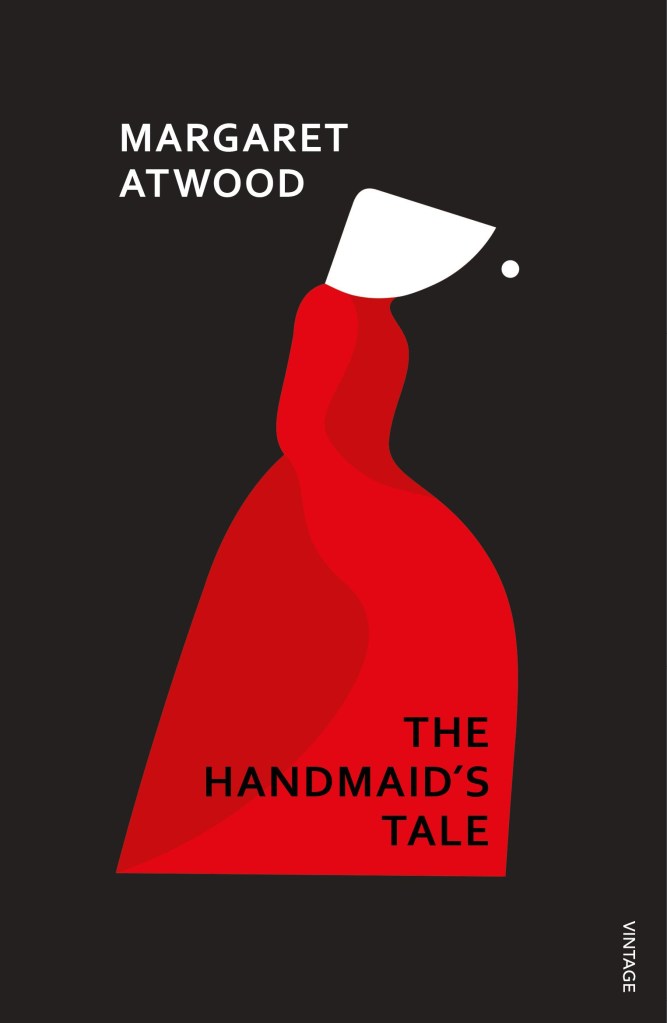
The Handmaid’s Tale by Margaret Atwood

SYNOPSIS:

Offred is a Handmaid in the Republic of Gilead. She may leave the home of the Commander and his wife once a day to walk to food markets whose signs are now pictures instead of words because women are no longer allowed to read. She must lie on her back once a month and pray that the Commander makes her pregnant, because in an age of declining births, Offred and the other Handmaids are valued only if their ovaries are viable. Offred can remember the years before, when she lived and made love with her husband, Luke; when she played with and protected her daughter; when she had a job, money of her own, and access to knowledge. But all of that is gone now…

Funny, unexpected, horrifying, and altogether convincing, The Handmaid’s Tale is at once scathing satire, dire warning, and tour de force.

REVIEW:

As much as I wanted to read this book because of how famous it is, my first attempt was unsuccessful. I couldn’t get comfortable with the voice of the protagonist, nor with the writing style. Later, I failed to love the TV series because it’s such a slow burn and patience is not exactly one of my qualities. I can’t even remember how exactly did I decide to give the series another chance, but once I passed the first few episodes I became addicted. As a consequence, after finishing the last season, my wish to finish the book rose again and this time I didn’t feel any of the issues that I had before. The read was smooth and compelling. But to be honest, if I were to make a comparison between the novel and the series, the book feels more like a skeleton and the TV show gives the story full body and depth.

Although a dystopia and (fortunately!), still far and different from our present, I find it absolutely incredible how accurate and relevant the book is, especially since it’s been written more than 35 years ago. Compared to other dystopian worlds, which always have a feel of incredulity, The Handmaid’s Tale seems to be built on reality at such a chilling, high level that it becomes absolutely terrifying. There’s almost no aspect of it that feels like it wouldn’t become possible any day in the near future.

With few exceptions, globally we’re living probably at the highest peak of freedom that humanity saw since modern times. And yet, looking around, you can’t help but notice irregularities all over the world, you can’t help but worry that all this freedom is more fragile than we’d like it to be. And above all, the fact that the whole world has access to live information doesn’t seem to help in any way. No country will get involved in another one’s business, no matter how abusive a government would suddenly become. They all declare their worry and disapproval and urge the abusive authorities to reconsider their ways, but that’s about it. Some news and articles for a few days and then the world forgets. That is exactly why The Handmaid’s Tale feels so real. Because if anything like it would happen today anywhere in the world, that is exactly how things would develop. All our normality, all our freedom could be suddenly taken away and nobody would lift a finger to stop it. So no matter how shocking some events are in Atwood’s story, they still make sense, they still look plausible. I can’t wrap my mind around the way the author managed to create this concept and the more I think about it, the more amazed I am.

I didn’t give it 5 stars only because I am influenced by the complexity of the TV series and therefore, by comparison, the book leaves a lot of gaps that were filled by the information I had from the show. But I highly recommend the novel. It’s somehow slow and tells all the events with such a mild and resigned voice that it might mask the atrocity while you’re reading. But once you put down the book, all the ideas will start rolling and bubbling inside your mind, leaving you with a feeling of shock and uneasiness.

Posted in Frances Cha

If I Had Your Face by Frances Cha

SYNOPSIS:

A debut novel set in contemporary Seoul, Korea, about four young women making their way in a world defined by impossibly high standards of beauty, secret room salons catering to wealthy men, strict social hierarchies, and K-pop fan mania. “Even as a girl, I knew the only chance I had was to change my face… even before a fortune-teller told me so.” Kyuri is a beautiful woman with a hard-won job at a “room salon,” an exclusive bar where she entertains businessmen while they drink. Though she prides herself on her cold, clear-eyed approach to life, an impulsive mistake with a client may come to threaten her livelihood.

Her roomate, Miho, is a talented artist who grew up in an orphanage but won a scholarship to study art in New York. Returning to Korea after college, she finds herself in a precarious relationship with the super-wealthy heir to one of Korea’s biggest companies.

Down the hall in their apartment building lives Ara, a hair stylist for whom two preoccupations sustain her: obsession with a boy-band pop star, and a best friend who is saving up for the extreme plastic surgery that is commonplace.

And Wonna, one floor below, is a newlywed trying to get pregnant with a child that she and her husband have no idea how they can afford to raise and educate in the cutthroat economy.

Together, their stories tell a tale that’s seemingly unfamiliar, yet unmistakably universal in the way that their tentative friendships may have to be their saving grace.

REVIEW:

If I Had Your Face promises to allow you to dive in some of the most notorious trends that are “leaking” lately from the contemporary Korean culture into the international media: the plastic surgeries turned into a norm, the K-pop mania, the obsession with impossible beauty standards, the pressure of social hierarchies, the lack of balance between work and family life. Frances Cha manages to deliver an insight into these strict standards, showing how five young women struggle to live within all the restrictions imposed by the modern Korean society.

I was honestly expecting something a bit deeper, an explanation on how people are “digesting” all this pressure, an active reaction from the characters forced to submit to such unattainable ideals. Instead, all of the five women just… go with the flow, conforming to the cultural norms, without questioning or opposing them. I know it somehow makes sense, because… how unbearable life would be if you wouldn’t internalize the rules of the society around you? If the collective mentality wouldn’t become embedded into your core like it would be your own? But I still cannot help feeling unsatisfied by the fact that what we see is just acceptance and nothing of the process that’s shaping the personalities of the characters.

Despite this, I didn’t dislike the book. It’s mildly entertaining, like a little innocent gossip that you hear on the brunch with your girlfriends. Not bringing any depth or substance, but offering enough amusement. The book lacks on tension, even if there is a visible attempt to create some suspense here and there. But Frances Cha still manages to keep you reading without frustration. Honestly, if the author decided to write extra 500 pages about the same day-to-day casual experiences of her characters, I probably wouldn’t have minded or became bored of it.

The only problem I had with the book is that the characters’ voices are so similar. Even if every chapter has the name of each woman, I still struggled to recognize who’s story I’m reading. And this issue lasted until the very end of the novel, it was not something that faded by becoming more familiar with the particularities of each individual.

Posted in John A. Heldt

Indiana Belle (American Journey #3) by John A. Heldt

SYNOPSIS:

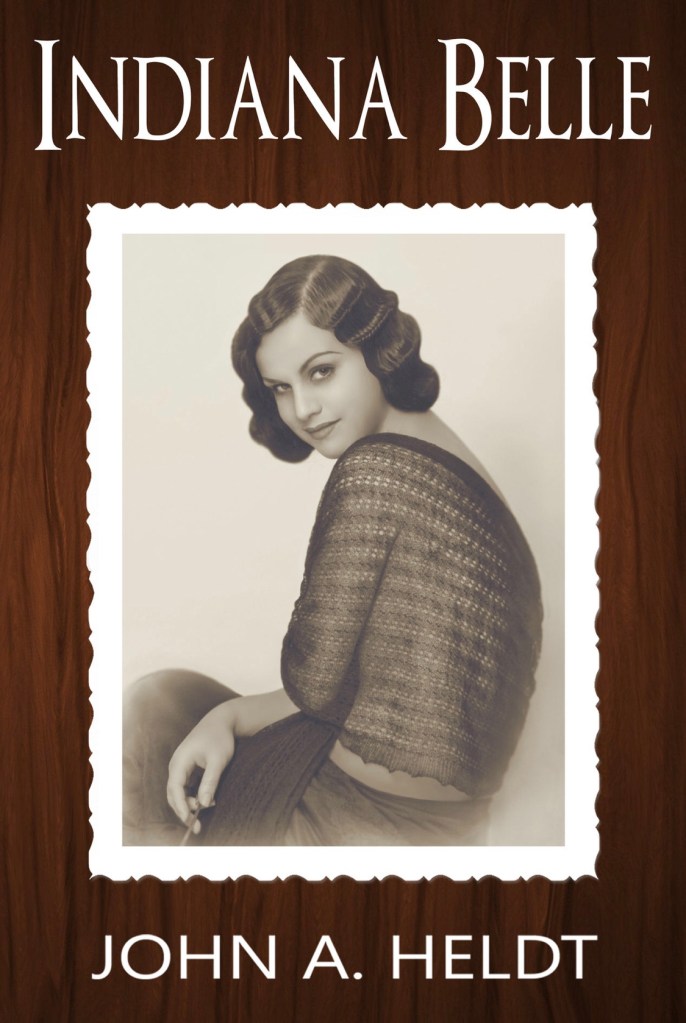
Providence, Rhode Island, 2017. When doctoral student Cameron Coelho, 28, opens a package from Indiana, he finds more than private papers that will help him with his dissertation. He finds a photograph of a beautiful society editor murdered in 1925 and clues to a century-old mystery. Within days, he meets Geoffrey Bell, the “time-travel professor,” and begins an unlikely journey through the Roaring Twenties.

Filled with history, romance, and intrigue, INDIANA BELLE follows a lonely soul on the adventure of a lifetime as he searches for love and answers in the age of Prohibition, flappers, and jazz.

REVIEW:

If I wouldn’t have seen the long list of this author’s books, I would have honestly thought that Indiana Belle is his debut novel. Not because of the storyline, but because of the writing style. The story is nice and cohesive, most of the characters’ portraits are sturdy enough to be credible, but the writing technique has something so… naive that it gives you the impression that the author just started his writing experience and that he’s trying to follow all the rules taught in school.

The main downside is that even for a time-traveling story, there are some aspects that just seemed either forced or not enough developed, so be prepared to swallow your frustration about this and just move on with the story. Despite this, I enjoyed the book: it has this nice, relaxed vibe, sweet and light like a lazy summer day, without any drama, stress or conflict. The world building is absolutely wonderful. The author throws you straight into the 1920s and colors the life there in bright, clear colors. I felt like the side characters were contributing even more to this, giving you a glimpse into the people’s mentality back then.

What drove me crazy was just the way the characters were oftentimes addressed. I understand the wish of avoiding repetition when referring to the same characters again and again, but expressions like “the rhode islander”, “the time traveler”, “the society editor” somehow put distance between the reader and the protagonists and after a while become annoying.

I didn’t connect in any way with Cameron, the book’s hero but I blame it more on the fact that I deeply hate the insta-love. And in his case, the concept is even more absurd: he falls in love with… a photo 😑 At least Candice has a more natural reaction and overall, her personality is more bubbly and charming. And as I mentioned before, even if their appearances are kind of episodic, I found almost all the secondary characters extremely well portrayed and their actions are a great addition to the whole 1920s picture.

Although the storyline flows pretty much without a major or breathtaking conflict, here and there, there will be some chapters that are breaking the rhythm and make the whole plot more entertaining. I personally loved the chapter from the far future and to be honest, I would have loved to see the story continuing in that era. It was an awesome and totally unexpected turn and it offered some extra flavor to the whole novel.

Indiana Belle is the third book in the American Journey series, but each novel can be read independently. I haven’t read the first two novels yet but I didn’t feel there were any missing points or that I skipped any connections with the previous two books.

Posted in Trish Harnetiaux

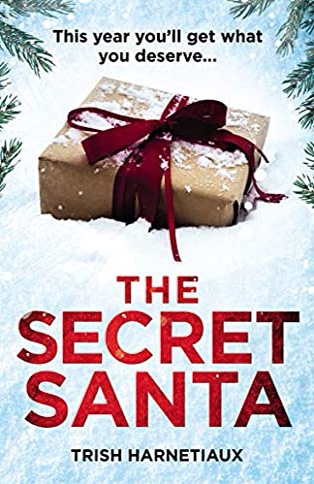
The Secret Santa by Trish Harnetiaux

SYNOPSIS:

You’re invited to a lavish Christmas party in an isolated mansion.
And your hosts will do anything to keep you from finding out their secrets…

When husband and wife Henry and Claudine organise their company’s Christmas party in a remote mansion, they expect it to be a night to remember. But the festive mood quickly turns sour when a sinister gift is unwrapped in the Secret Santa gift exchange. As heavy snow traps the guests inside the mountainside lodge, it quickly becomes clear that one of the party is out for revenge.

It’s no longer just about enduring the evening. It’s about making sure you get out alive.

A lavish locked-room mystery with a seasonal edge, THE SECRET SANTA is packed with twists that will keep you guessing until the very last page.

REVIEW:

This book felt very much like a shot of alcohol: super fast and surprisingly intense, you’re finishing it before you even know it and it gives you no time to get bored or lose your interest.

Yes, the story doesn’t go super deep and it might feel more like a short story or novella instead of a full length novel despite the decent number of pages. However, it definitely doesn’t feel rushed or incomplete. Perhaps it’s not offering a lot when it comes to people’ motivations or complex descriptions, but it brings a clear view of the actions happening and colorful enough portraits of the main characters. And by colorful I believe it is the best way to describe the individuals that we’re encountering in The Secret Santa. Nobody could argue that their personalities are the most genuine, but in the same time, they’re not annoyingly unbelievable also. It feels like the author took some very normal features and just exaggerated them enough to make a statement, but not to the point where the characters turn to caricatures. I encountered this technique before with other authors and always loved it. It’s like the characters themselves become the definition of certain traits: ambition, platitude, stubbornness, revenge, etc. But in the same time, they are portrayed with enough colors to give them full personalities. Frankly, you’ll never meet in real life such unidirectional personalities but for sure you won’t mind loving them or hating them when you’re reading about them.

As long as you don’t start the book expecting a deep dive, but instead, a light and catchy story, I’m sure you’ll be enjoying it a lot and find very little things to judge or to dislike.

Posted in Stephen Graham Jones, Uncategorized

The Only Good Indians by Stephen Graham Jones

SYNOPSIS:

The creeping horror of Paul Tremblay meets Tommy Orange’s There There in a dark novel of revenge, cultural identity, and the cost of breaking from tradition in this latest novel from the Jordan Peele of horror literature, Stephen Graham Jones.

Seamlessly blending classic horror and a dramatic narrative with sharp social commentary, The Only Good Indians follows four American Indian men after a disturbing event from their youth puts them in a desperate struggle for their lives. Tracked by an entity bent on revenge, these childhood friends are helpless as the culture and traditions they left behind catch up to them in a violent, vengeful way.

REVIEW:

I have no idea how exactly to explain my initial reaction to this book. I’ve read countless books in English, which is not my mother tongue, I live in an English speaking country and use the language every day, but once I started The Only Good Indians I felt like I don’t understand a word, like I’m reading in Chinese. After a few pages, I even passed the book to my SO to make sure that my brain didn’t suddenly lose its ability to read or to understand a sentence. And no, it clearly wasn’t me, it was the writing. I still have no idea what exactly happened there, what the issue was. Each word had a meaning, but somehow, put together, they just didn’t have any sense. Somehow, after a few chapters, things sort of went back to normal and the phrasing was smoother. Despite that, the book still didn’t catch me and I just wanted to finish it faster and be done with it.

The storyline is definitely original and not one of the tipical horror plots, but that’s pretty much the only good thing I can say about it. I’ve seen so many excited reactions about this novel, I saw it in so many 2020 tops. It’s not even the fact that my expectations weren’t met. I wasn’t just disappointed, I simply disliked everything about it. The characters weren’t interesting, I couldn’t sympathize with any of them, their actions seemed illogical half of the time, the storyline wasn’t catchy, the plot didn’t make my pulse jump or give me the feeling that I’m reading a horror. In addition, I feel like the author tried so much to signal that this is a story about native indians that it became repetitive and annoying.

Considering that so many readers gave positive reviews and I’m in minority here, I’m just going to assume this was not a story for me, but it can definitely be for somebody else. So in case you’re feeling tempted to give it a try, don’t let my opinion discourage you from reading it.