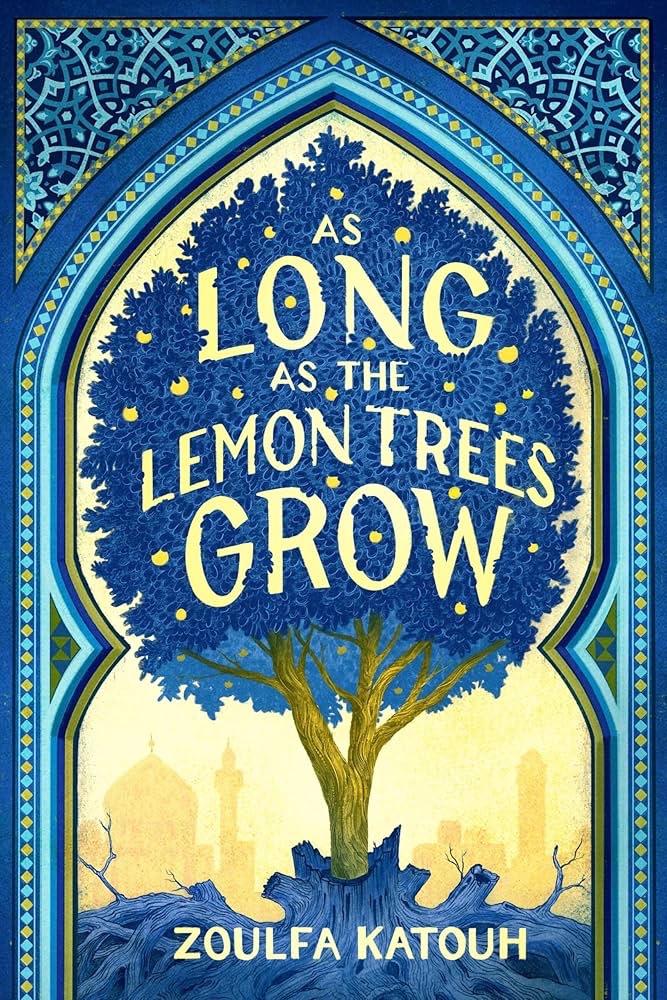
SYNOPSIS:
Salama Kassab was a pharmacy student when the cries for freedom broke out in Syria. She still had her parents and her big brother; she still had her home. She had a normal teenager’s life.
Now Salama volunteers at a hospital in Homs, helping the wounded who flood through the doors daily. Secretly, though, she is desperate to find a way out of her beloved country before her sister-in-law, Layla, gives birth. So desperate, that she has manifested a physical embodiment of her fear in the form of her imagined companion, Khawf, who haunts her every move in an effort to keep her safe.
But even with Khawf pressing her to leave, Salama is torn between her loyalty to her country and her conviction to survive. Salama must contend with bullets and bombs, military assaults, and her shifting sense of morality before she might finally breathe free. And when she crosses paths with the boy she was supposed to meet one fateful day, she starts to doubt her resolve in leaving home at all.
Soon, Salama must learn to see the events around her for what they truly are—not a war, but a revolution—and decide how she, too, will cry for Syria’s freedom.
REVIEW:
Since I was a kid, my reading pattern is loving a genre for a few years, until my brain is oversaturated with it and then moving on to another genre that I’ll be addicted to, for the next few years. Rinse and repeat, throughout my whole life.
I long forgotten about YA books for the last decade or so. And I kind of though that at this age now, I would probably get dizzy from rolling my eyes at the usual teen drama.
However, As Long As The Lemon Trees Grow gave me a very clear reminder why I loved YA for so many years. Besides the main storyline, which I’ll discuss later, I couldn’t help myself from smiling because of the young love story within it. I was surprised to see that I’m reading those parts with the same delight as 15 years ago.
But As Long As The Lemon Trees Grow is definitely way, way more than just a love story. It’s a microscope that looks straight into the cruelty of war and terror and cuts through your heart with every page.
“The rest of the world does’t know (…) Syria is just a word to them. But to us, she’s our life.“
Syria. Ukraine. Palestine. How many of these names are indeed, just words, for us who are living in safe places. We hear something about a war somewhere, we pity the people of that country and maybe shudder at the thought for a while. But it’s so unbelievably difficult to really understand the enormity of a war. It’s absolutely impossible to imagine that yesterday, those people were living just like us, going to the office, meeting friends in a coffee shop, decorating their new apartment, watering their plants. And today their whole world is in crumbles, their families torn and they can either stay there and wait for an inevitable violent death or pack all what’s left from the rubble in one suitcase and try to run towards a world that does not want them.
There used to be a quote by Warsan Shire circulating online a while back and I feel it tattooed on my heart since the first time I read it. I think it defines more than ever the current state of our world:
“later that night
i held an atlas in my lap
ran my fingers across the whole world
and whispered
where does it hurt?
it answered
everywhere
everywhere
everywhere.“
Every single time when I reach to any historical fiction I am reminded of the horrors that humans inflicted for centuries over their own kind. And every time I am shocked that we continue to do so, without a single glance in the past, without a trace of mercy. Just cruelty, distruction and unbelievable greed everywhere… And the price? “Your life sliced away from you piece by piece“
I read the first half of the book with a mix of sadness, anger and hope. The second half I read it… with my heart in my throat. By the time I finished it, I felt physically exhausted, as if my whole being lived inside the pages. It’s unbelievably how swiftly and subtly the author draws you into the story until your emotions are not yours anymore and they fully entwine with the ones of her characters.
I don’t even have space in my brain now to comment or analyse the characters, the style, all the things that I normally talk about in my reviews. Zoulfa Katouh mirrored all the faces of humanity in her characters, the good and the bad, the kindness and the evil, the fear and the courage. And more impressing is the fact that oftentimes, all those opposite emotions radiate not from different characters but live inside each one of them.
I’m honestly feeling grateful for having had the privilege to read this book, grateful to the author for bringing light about this topic in such a a way. Despite the heaviness, despite all the terror and sorrow that reverberate throughout the pages, you are left with hope at the end of the book. And as she wrote in her Acknowledgments, that was the main purpose of the novel.