Posted in Jessica Knoll, Uncategorized

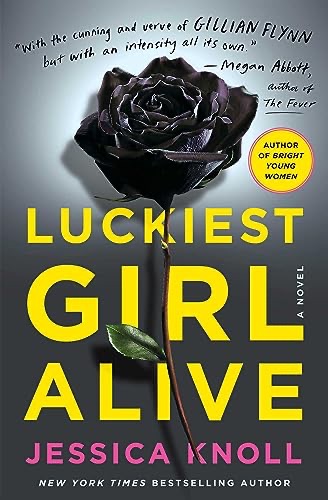
Luckiest Girl Alive by Jessica Knoll

SYNOPSIS:

Her perfect life is a perfect lie.

As a teenager at the prestigious Bradley School, Ani FaNelli endured a shocking, public humiliation that left her desperate to reinvent herself.

Now, with a glamorous job, expensive wardrobe, and handsome blue blood fiancé, she’s this close to living the perfect life she’s worked so hard to achieve.

But Ani has a secret. There’s something else buried in her past that still haunts her, something private and painful that threatens to bubble to the surface and destroy everything.

With a singular voice and twists you won’t see coming, Luckiest Girl Alive explores the unbearable pressure that so many women feel to “have it all” and introduces a heroine whose sharp edges and cutthroat ambition have been protecting a scandalous truth, and a heart that’s bigger than it first appears. The question remains: will breaking her silence destroy all that she has worked for-or, will it at long last, set Ani free?

REVIEW:

I’m very rarely bothered by the style of a book and I’m usually too captivated by the story in order to notice any possible errors or any… stylistic issues. But my god, did Luckiest Girl Alive, bore me with those long, long sentences. There’s description after description for literally every single thing, important or not. Moreover, each phrase contains several metaphors and “quirky” little comparisons. It’s getting so tiring after a while that I’d just start reading a sentence, lose interest midway and skip the rest.

Anyway, I persisted and after a while I managed to get used to the style and just focus on the storyline. Or perhaps the author just changed her style? I don’t even know anymore honestly.

The protagonist couldn’t be more annoying in the beginning. She’s not just intentionally bitchy, but she wants everyone to know what a mean person she is. Page after page, every action and sentence just screams: “Look at me how rich, important and cool I am!”. Later it becomes obvious that it’s just a protection mechanism for her to deal with her past. The more vulnerable she becomes, the more you forgive her shallowness from the beginning.

The story begins to become stronger and more disturbing as you read on and at some point it’s easy to forget all the negative aspects that you observed in the first few chapters.

You start to actually love it and be captivated by it and then.. bam! You get this new age ending where she made peace with herself, with everyone around her and with her past and she’s all wise and transformed into a new person who is suddenly not craving for attention and for luxury and for that perfect image that she was dreaming about just months before.

The whole book is just a hot pot of mixed feelings. I didn’t hate it, or at least not all the time, but I can’t say that I liked it either. And despite the fact that I rolled my eyes over and over again… overall it did not actually bore me. I didn’t find it memorable but in the same time, it did keep me hooked enough to finish it in a few days.

And I guess it’s worth giving it a chance, because not a lot of books manage to trigger such confusing reactions. Plus, the fact that they made a movie out of it kind of tells you it’s not really a waste of time.

Posted in Nikki Erlick, Uncategorized

The Measure by Nikki Erlick

SYNOPSIS:

Instant New York Times Bestseller!

A luminous, spirit-lifting blockbuster that asks: would you choose to find out the length of your life?

Eight ordinary people. One extraordinary choice. It seems like any other day. You wake up, drink a cup of coffee, and head out. But today, when you open your front door, waiting for you is a small wooden box. The contents of this mysterious box tells you the exact number of years you will live. From suburban doorsteps to desert tents, every person on every continent receives the same box. In an instant, the world is thrust into a collective frenzy. Where did these boxes come from? What do they mean? Is there truth to what they promise? As society comes together and pulls apart, everyone faces the same shocking choice:

Do they wish to know how long they’ll live? And, if so, what will they do with that knowledge? The Measure charts the dawn of this new world through an unforgettable cast of characters whose decisions and fates interweave with one another: best friends whose dreams are forever entwined, pen pals finding refuge in the unknown, a couple who thought they didn’t have to rush, a doctor who cannot save himself, and a politician whose box becomes the powder keg that ultimately changes everything. Enchanting and deeply uplifting, The Measure is an ambitious, invigorating story about family, friendship, hope, and destiny that encourages us to live life to the fullest.

REVIEW:

This book reminded me of World War Z (the book, not that terribly disappointing movie) and that was one of my favourite stories ever! I loved The Measure for the same reasons I loved WWZ: both writers take an impossible idea and just ask “What would the whole world do if this crazy thing happened?”
And this is how this kind of novels are born, analysing the reactions of different countries based on our current reality and the state of the world.


There is no explanation on why that major thing happened. Only suppositions that are never proven real, so everyone just has to take things as they come and deal with them as best as they can. And honestly, there was not a second when I wished for a different storyline. Personally, I care less about the reason why any sort of mystery happens and more about the reaction that follows it.


There is no hero. No main characters, even though the story is narated through the eyes of different characters. The Measure does have fewer characters than WWZ so they do become more significant and it’s easier to become interested in their destinies. But I still feel like their purpose there is to lay the bigger story and not to limit the reading experience only to their own little roles.


I think it would have been interesting if the author treated the story on a larger scale, showing the reactions of more countries. But I might be biased here because of my love of WWZ and I just dream of a reacreation of that.
Still, Nikki Erlick did a great job portraying exactly how different societies would react to… basically anything unexpected or completely out of ordinary. There is no better illustration of how everything can and will be turned into a game of power, interests and money by the higher classes, while the regular people are the ones dealing with the injustice, pain and fighting for the greater good.


Loved the idea, loved the execution! It might not completely blow your mind, especially since it lacks a clear explanation about the origin or purpose of the boxes. But it will definitely provoke your mind over and over again with each chapter that comes.

Posted in Taylor Jenkins Reid

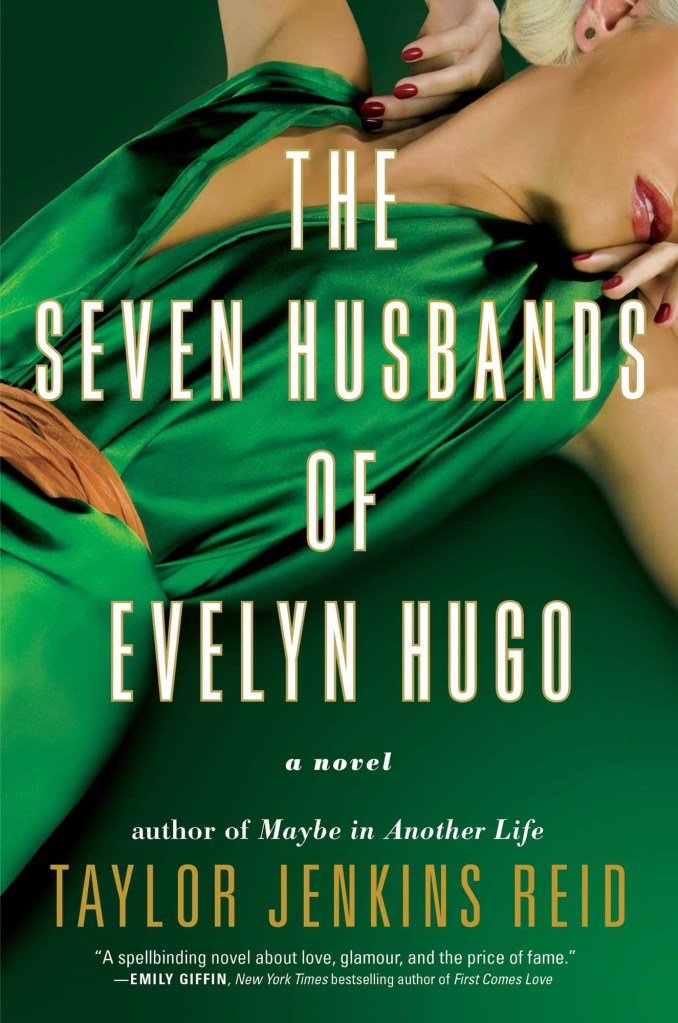
The Seven Husbands Of Evelyn Hugo by Taylor Jenkins Reid

SYNOPSIS:

Aging and reclusive Hollywood movie icon Evelyn Hugo is finally ready to tell the truth about her glamorous and scandalous life. But when she chooses unknown magazine reporter Monique Grant for the job, no one is more astounded than Monique herself. Why her? Why now? Monique is not exactly on top of the world. Her husband has left her, and her professional life is going nowhere. Regardless of why Evelyn has selected her to write her biography, Monique is determined to use this opportunity to jumpstart her career. Summoned to Evelyn’s luxurious apartment, Monique listens in fascination as the actress tells her story. From making her way to Los Angeles in the 1950s to her decision to leave show business in the ’80s, and, of course, the seven husbands along the way, Evelyn unspools a tale of ruthless ambition, unexpected friendship, and a great forbidden love. Monique begins to feel a very real connection to the legendary star, but as Evelyn’s story nears its conclusion, it becomes clear that her life intersects with Monique’s own in tragic and irreversible ways.

REVIEW:

I am so unimpressed by this book that I don’t even know what to write in this review. I didn’t hate it, but everything in it was so bland that I find it inexplicable how it managed to create such waves in the reading communities.

The whole book revolves around the idea of the difficulties of being queer during an era when this was seen as one of the greatest possible sins. Unfortunately, for me, it just didn’t look like it was enough to center a whole novel around it. Some might say that the fame of the protagonist is adding more to the tension of the story, but objectively, the stardom (and the money and influence that come with it) only made things easier for the protagonists.

I’m always open to love a book even if the storyline is not the best, if it compensates with some good characters. But besides Harry, the longest lasting husband of Evelyn, who was really lovely (still pretty dull, but at least sweet enough to balance it), everyone else was either insipid or terribly annoying.

There’s no drama, no suspense, nothing memorable or breathtaking. Just a flat, boring and flavourless story that wants to be deep but fails. I did like the fact that there is no joyous ending. The only thing that would have made things worse would have been to turn the whole plot into a classic happy ending where everything gets bubbly and optimistic.

Posted in Stephen Graham Jones, Uncategorized

The Only Good Indians by Stephen Graham Jones

SYNOPSIS:

The creeping horror of Paul Tremblay meets Tommy Orange’s There There in a dark novel of revenge, cultural identity, and the cost of breaking from tradition in this latest novel from the Jordan Peele of horror literature, Stephen Graham Jones.

Seamlessly blending classic horror and a dramatic narrative with sharp social commentary, The Only Good Indians follows four American Indian men after a disturbing event from their youth puts them in a desperate struggle for their lives. Tracked by an entity bent on revenge, these childhood friends are helpless as the culture and traditions they left behind catch up to them in a violent, vengeful way.

REVIEW:

I have no idea how exactly to explain my initial reaction to this book. I’ve read countless books in English, which is not my mother tongue, I live in an English speaking country and use the language every day, but once I started The Only Good Indians I felt like I don’t understand a word, like I’m reading in Chinese. After a few pages, I even passed the book to my SO to make sure that my brain didn’t suddenly lose its ability to read or to understand a sentence. And no, it clearly wasn’t me, it was the writing. I still have no idea what exactly happened there, what the issue was. Each word had a meaning, but somehow, put together, they just didn’t have any sense. Somehow, after a few chapters, things sort of went back to normal and the phrasing was smoother. Despite that, the book still didn’t catch me and I just wanted to finish it faster and be done with it.

The storyline is definitely original and not one of the tipical horror plots, but that’s pretty much the only good thing I can say about it. I’ve seen so many excited reactions about this novel, I saw it in so many 2020 tops. It’s not even the fact that my expectations weren’t met. I wasn’t just disappointed, I simply disliked everything about it. The characters weren’t interesting, I couldn’t sympathize with any of them, their actions seemed illogical half of the time, the storyline wasn’t catchy, the plot didn’t make my pulse jump or give me the feeling that I’m reading a horror. In addition, I feel like the author tried so much to signal that this is a story about native indians that it became repetitive and annoying.

Considering that so many readers gave positive reviews and I’m in minority here, I’m just going to assume this was not a story for me, but it can definitely be for somebody else. So in case you’re feeling tempted to give it a try, don’t let my opinion discourage you from reading it.

Posted in Celeste Ng

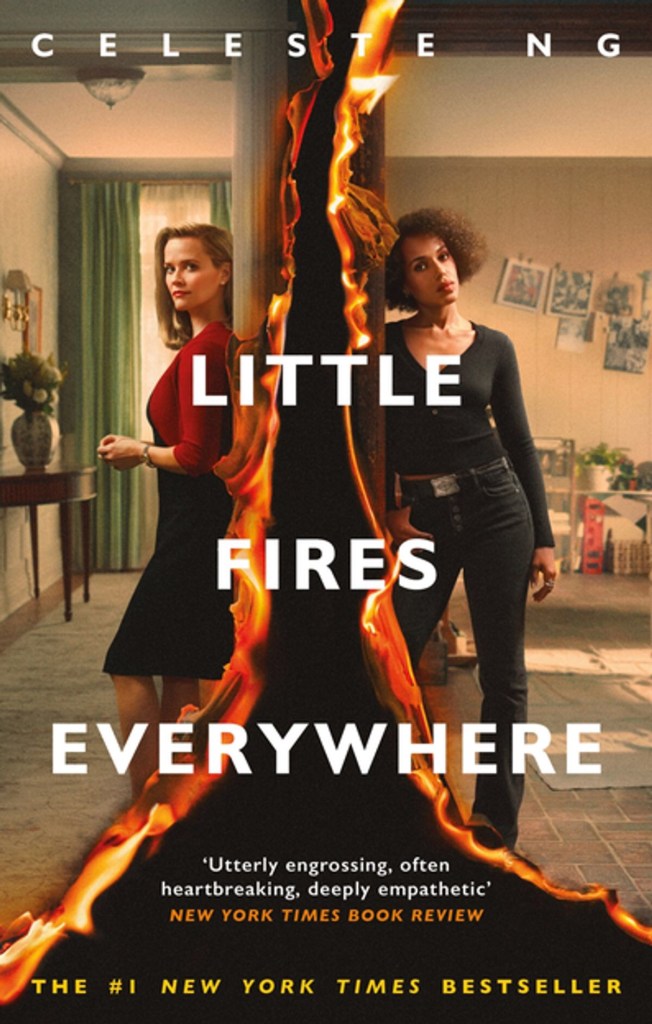
Little Fires Everywhere by Celeste Ng

SYNOPSIS:

From the bestselling author of Everything I Never Told You, a riveting novel that traces the intertwined fates of the picture-perfect Richardson family and the enigmatic mother and daughter who upend their lives.

In Shaker Heights, a placid, progressive suburb of Cleveland, everything is planned–from the layout of the winding roads, to the colors of the houses, to the successful lives its residents will go on to lead. And no one embodies this spirit more than Elena Richardson, whose guiding principle is playing by the rules.

Enter Mia Warren–an enigmatic artist and single mother–who arrives in this idyllic bubble with her teenaged daughter Pearl, and rents a house from the Richardsons. Soon Mia and Pearl become more than tenants: all four Richardson children are drawn to the mother-daughter pair. But Mia carries with her a mysterious past and a disregard for the status quo that threatens to upend this carefully ordered community.

When old family friends of the Richardsons attempt to adopt a Chinese-American baby, a custody battle erupts that dramatically divides the town–and puts Mia and Elena on opposing sides. Suspicious of Mia and her motives, Elena is determined to uncover the secrets in Mia’s past. But her obsession will come at unexpected and devastating costs.

Little Fires Everywhere explores the weight of secrets, the nature of art and identity, and the ferocious pull of motherhood–and the danger of believing that following the rules can avert disaster.

REVIEW:

I was not intending to read this book, but after watching the TV series, what eventually convinced me otherwise was the fact that… it seemed like my sympathies laid on the wrong side. Between the readers, there will always be Team A or Team B (remember Twilight?) but usually this happens when both options are reasonable and do not fall under the “villain” category. After watching the TV series, completely empathizing with Elena Richardson and almost hating Mia Warren, I discovered with shock that most of the people had a complete opposite opinion. Like.. Elena was the bad one?! Did we really watch the same thing?
So I started the book just to see if it will leave me with the same perspective or offer some additional details that might explain why most of the people had a different point of view.

Although you might expect the opposite when it comes to a book versus its adaptation, I felt like this time, the screenplay offered somehow an ampler spectrum of the main characters’ colors. In the book, Elena’s actions are clearly throwing her in the villain’s role, without giving too much depth to her reasons. By comparison, Mia’s lack of color makes you sympathetic to her cause without the justification of any actions, but simply because of the role she’s playing: the single, poor, but dignified mother that’s just trying to raise her daughter in the best way and… doesn’t really do much else.

In the TV series, my perception was different. Mia is selfish, sacrificing her daughter’s happiness and stability on the altar of her own career dreams. She stabs Elena in the back, she sets off a custody battle because of her own past trauma and without actually thinking about the well-being of the baby, she subtly manipulates and uses people around her. Yes, some of Elena’s actions are questionable as well, but only after she’s been provoked by Mia and usually have a “the end justifies the means” vibe. But overall, Elena just fights in a fairer way, with more direct hits. And even though her portrait might be simpler than Mia’s, who is this hipster-ish, gipsy-at-heart, mysterious and misunderstood artist, I stand by Elena’s cause. Although she sacrificed her own dreams for the sake of the family, I did love the fact that she had a strong attitude and turned the situation in the best way, without victimizing herself, despite having some regrets at an unconscious level. Meanwhile, Mia sacrifices everyone around her (her parents, the Ryan couple, Bebe Chow, the disputed baby, her own daugheter) for the sake of her own dreams and beliefs, without any doubts or remorse.

I also loved the portrayal of the other characters more in the TV series than in the book. All of the side characters and all of the kids’ experiences (both Pearl’s and the Richardsons’) are more lively and intense, you get to know them deeper and overall, the TV series just does it better. I feel like the book is covered by a veil that makes everything and everyone faded and blury, while the screenplay removed that veil and allowed the action to shine bright and colorful.