Posted in Taylor Jenkins Reid

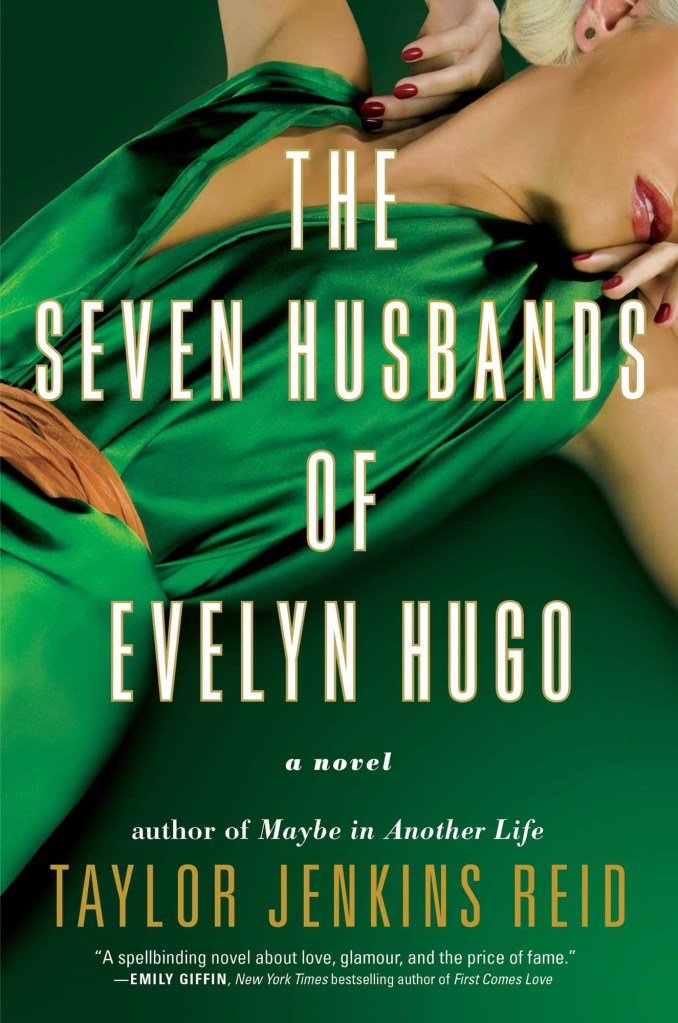
The Seven Husbands Of Evelyn Hugo by Taylor Jenkins Reid

SYNOPSIS:

Aging and reclusive Hollywood movie icon Evelyn Hugo is finally ready to tell the truth about her glamorous and scandalous life. But when she chooses unknown magazine reporter Monique Grant for the job, no one is more astounded than Monique herself. Why her? Why now? Monique is not exactly on top of the world. Her husband has left her, and her professional life is going nowhere. Regardless of why Evelyn has selected her to write her biography, Monique is determined to use this opportunity to jumpstart her career. Summoned to Evelyn’s luxurious apartment, Monique listens in fascination as the actress tells her story. From making her way to Los Angeles in the 1950s to her decision to leave show business in the ’80s, and, of course, the seven husbands along the way, Evelyn unspools a tale of ruthless ambition, unexpected friendship, and a great forbidden love. Monique begins to feel a very real connection to the legendary star, but as Evelyn’s story nears its conclusion, it becomes clear that her life intersects with Monique’s own in tragic and irreversible ways.

REVIEW:

I am so unimpressed by this book that I don’t even know what to write in this review. I didn’t hate it, but everything in it was so bland that I find it inexplicable how it managed to create such waves in the reading communities.

The whole book revolves around the idea of the difficulties of being queer during an era when this was seen as one of the greatest possible sins. Unfortunately, for me, it just didn’t look like it was enough to center a whole novel around it. Some might say that the fame of the protagonist is adding more to the tension of the story, but objectively, the stardom (and the money and influence that come with it) only made things easier for the protagonists.

I’m always open to love a book even if the storyline is not the best, if it compensates with some good characters. But besides Harry, the longest lasting husband of Evelyn, who was really lovely (still pretty dull, but at least sweet enough to balance it), everyone else was either insipid or terribly annoying.

There’s no drama, no suspense, nothing memorable or breathtaking. Just a flat, boring and flavourless story that wants to be deep but fails. I did like the fact that there is no joyous ending. The only thing that would have made things worse would have been to turn the whole plot into a classic happy ending where everything gets bubbly and optimistic.
Posted in A.G. Riddle

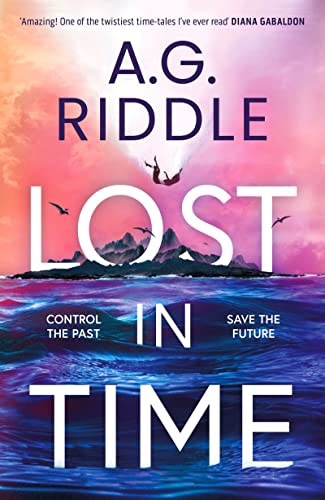
Lost In Time by A.G. Riddle

SYNOPSIS:

When his daughter is falsely accused of murder, a scientist must travel 200 million years into the past to save her. But there are secrets waiting there. And more than her life is at stake.

From the worldwide bestselling author of Departure and Winter World comes a standalone novel with a twist you’ll never see coming.

Control the Past.
Save the Future.

REVIEW:

I KNEW that I’m going to enjoy this book. It involves time traveling, which is never a boring concept and… dinosaurs (!!) which are one of my oldest obsessions, so I was definitely expecting to find it interesting. What I didn’t expect though, was to hold my breath from page 1 until the very end!

Every chapter brings a more surprising turn, every new discovery is mind blowing, every page makes your heart beat a little faster. I cannot express how much I’ve loved it, although later the whole time traveling process becomes so complicated that my brain wasn’t even keeping up with all the scientific explanations. So yeah, I’m surprised by how a book can make you feel so stupid, yet keep you so hooked on in the same time.

I honestly cannot think of any negative aspects. I loved the fact that all secondary characters have their own demons, their own secrets and stories and they’re more than just decorum in the book.
I enjoyed the relations between the characters, how fragile the balance is and how every small detail changes the way they see each other and also how you, the reader, suddenly switch your perspective of them. You trust someone in one chapter, only to turn the page and see them in the villain role.

The novel already starts with such an intriguing premise, but it’s unbelievable how much more complex it turns later. All while continuing to give logical and credible explanations for all the factors that we might consider a bit too much, like the amount of money the characters have, the unlimited resources, etc. The author doesn’t dive too deeply into those clarifications, but what he offers is kind of enough and I was happy to see he didn’t leave any loose ends.

I didn’t encounter in a very long time a novel that would keep me so entertained. I had the same feelings that I used to have as a child, while reading adventure books. Lost In Time gave me Jules Verne/Arthur Connan Doyle vibes, while bringing a lot more in terms of psychological suspense.

Posted in Ruta Sepetys

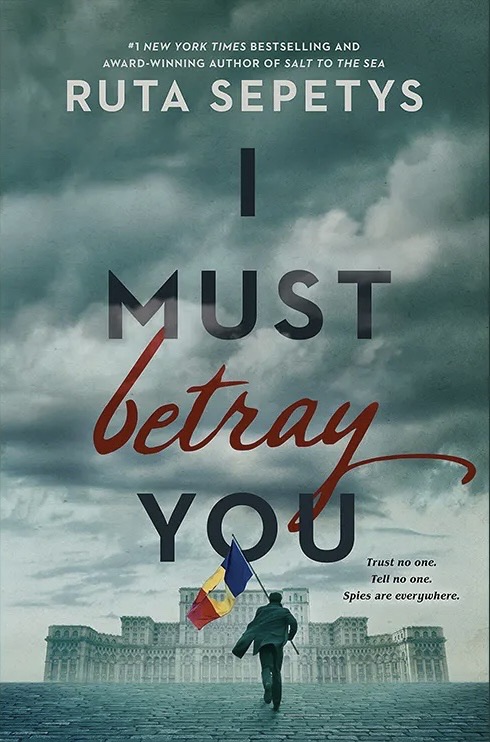
I Must Betray You by Ruta Sepetys

SYNOPSIS:

Romania, 1989. Communist regimes are crumbling across Europe. Seventeen-year-old Cristian Florescu dreams of becoming a writer, but Romanians aren’t free to dream; they are bound by rules and force.

Amidst the tyrannical dictatorship of Nicolae Ceaușescu in a country governed by isolation and fear, Cristian is blackmailed by the secret police to become an informer. He’s left with only two choices: betray everyone and everything he loves—or use his position to creatively undermine the most notoriously evil dictator in Eastern Europe.

Cristian risks everything to unmask the truth behind the regime, give voice to fellow Romanians, and expose to the world what is happening in his country. He eagerly joins the revolution to fight for change when the time arrives. But what is the cost of freedom?

A gut-wrenching, startling window into communist Romania and the citizen spy network that devastated a nation, from the number one New York Times best-selling, award-winning author of Salt to the Sea and Between Shades of Gray.

REVIEW:

My blood was trembling in my veins during this entire read. I’m familiar with Ruta Sepetys’ work, so when I found out that her next book is about the Romanian communism and revolution I didn’t know how to get it faster. I have no idea if her new novel will impress readers from other countries as much, but as a Romanian born during the communism, I have to take my hat off to the impressive work the writer has done. I’m in an awe that such a well documented book can be written by someone who not only is not Romanian, but had absolutely no previous connection to Romania until just a few years back. I can’t imagine how many years Ruta worked in order to aquire such amount of information, but the fact that there is a list of five (5!!) pages of sources at the end of the novel, gives you an idea about the amount of documentation needed in order to create such a realistic story.

It’s not just the romanian words that are thrown everywhere in the book. If the writer wouldn’t have used any, the impact would have been exactly the same. But every single description of the places, the atmosphere, the interactions or the feelings is literally screaming “Romania”. The book might not impress by the amount of shocking events. Or at least not until the last few chapters. But it builds such a dense tension that you can feel it covering your soul, your thoughts, just by recreating the normality of those years. The scepticism, the doubt, the constant feeling that you’re being watched and heard, the habit of always looking over your shoulder. The hunger, the darkness and the cold. The whispers, the suffocation. And over everything, the fear. The constant fear, the paralyzing fear that never goes away since you are a child and until you die. In you and in every single person around you. The fear becomes as normal and everlasting as your breathing, crushing your mind, your will, your dreams, your voice, bending you as a human being, bending an entire society.

Any revolution is a fight for freadom, a scream against suffering and distress. But what we often forget and what this book emphasizes is that a revolution is not only agains the system. It’s also against your deepest fears, agains your survival instinct that tells you to stay hidden, to stay safe, against your mother telling you not to go out, because outside it’s dangerous, against you leaving your friends in danger in order to go out there and confront an even greater danger. Because it’s not just about you, it’s about everything and everyone around you and all the generations following.

Between the pages of I Must Betray You are decades of pain that an entire country had suffered. Things that, depending on our age, we either lived or heard so much from our parents or grandparents that seem almost normal or unimpressive. For us, this is just how things were, that’s it. But for readers born in countries that were always free, for people unfamiliar with what communism meant, all our normality will look appalling. Ruta Sepetys doesn’t offer a history lesson. She literally takes you from your comfortable present and throws you in the past, in the middle of the history, living and feeling along with the characters inside the book.

Posted in Margaret Atwood

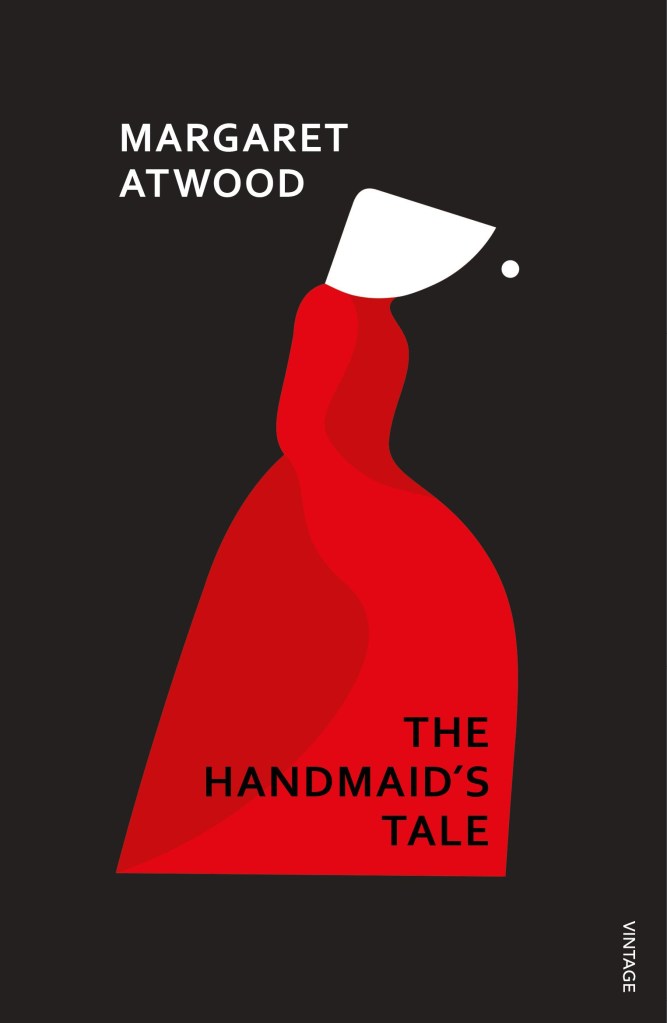
The Handmaid’s Tale by Margaret Atwood

SYNOPSIS:

Offred is a Handmaid in the Republic of Gilead. She may leave the home of the Commander and his wife once a day to walk to food markets whose signs are now pictures instead of words because women are no longer allowed to read. She must lie on her back once a month and pray that the Commander makes her pregnant, because in an age of declining births, Offred and the other Handmaids are valued only if their ovaries are viable. Offred can remember the years before, when she lived and made love with her husband, Luke; when she played with and protected her daughter; when she had a job, money of her own, and access to knowledge. But all of that is gone now…

Funny, unexpected, horrifying, and altogether convincing, The Handmaid’s Tale is at once scathing satire, dire warning, and tour de force.

REVIEW:

As much as I wanted to read this book because of how famous it is, my first attempt was unsuccessful. I couldn’t get comfortable with the voice of the protagonist, nor with the writing style. Later, I failed to love the TV series because it’s such a slow burn and patience is not exactly one of my qualities. I can’t even remember how exactly did I decide to give the series another chance, but once I passed the first few episodes I became addicted. As a consequence, after finishing the last season, my wish to finish the book rose again and this time I didn’t feel any of the issues that I had before. The read was smooth and compelling. But to be honest, if I were to make a comparison between the novel and the series, the book feels more like a skeleton and the TV show gives the story full body and depth.

Although a dystopia and (fortunately!), still far and different from our present, I find it absolutely incredible how accurate and relevant the book is, especially since it’s been written more than 35 years ago. Compared to other dystopian worlds, which always have a feel of incredulity, The Handmaid’s Tale seems to be built on reality at such a chilling, high level that it becomes absolutely terrifying. There’s almost no aspect of it that feels like it wouldn’t become possible any day in the near future.

With few exceptions, globally we’re living probably at the highest peak of freedom that humanity saw since modern times. And yet, looking around, you can’t help but notice irregularities all over the world, you can’t help but worry that all this freedom is more fragile than we’d like it to be. And above all, the fact that the whole world has access to live information doesn’t seem to help in any way. No country will get involved in another one’s business, no matter how abusive a government would suddenly become. They all declare their worry and disapproval and urge the abusive authorities to reconsider their ways, but that’s about it. Some news and articles for a few days and then the world forgets. That is exactly why The Handmaid’s Tale feels so real. Because if anything like it would happen today anywhere in the world, that is exactly how things would develop. All our normality, all our freedom could be suddenly taken away and nobody would lift a finger to stop it. So no matter how shocking some events are in Atwood’s story, they still make sense, they still look plausible. I can’t wrap my mind around the way the author managed to create this concept and the more I think about it, the more amazed I am.

I didn’t give it 5 stars only because I am influenced by the complexity of the TV series and therefore, by comparison, the book leaves a lot of gaps that were filled by the information I had from the show. But I highly recommend the novel. It’s somehow slow and tells all the events with such a mild and resigned voice that it might mask the atrocity while you’re reading. But once you put down the book, all the ideas will start rolling and bubbling inside your mind, leaving you with a feeling of shock and uneasiness.

Posted in Stephen Graham Jones, Uncategorized

The Only Good Indians by Stephen Graham Jones

SYNOPSIS:

The creeping horror of Paul Tremblay meets Tommy Orange’s There There in a dark novel of revenge, cultural identity, and the cost of breaking from tradition in this latest novel from the Jordan Peele of horror literature, Stephen Graham Jones.

Seamlessly blending classic horror and a dramatic narrative with sharp social commentary, The Only Good Indians follows four American Indian men after a disturbing event from their youth puts them in a desperate struggle for their lives. Tracked by an entity bent on revenge, these childhood friends are helpless as the culture and traditions they left behind catch up to them in a violent, vengeful way.

REVIEW:

I have no idea how exactly to explain my initial reaction to this book. I’ve read countless books in English, which is not my mother tongue, I live in an English speaking country and use the language every day, but once I started The Only Good Indians I felt like I don’t understand a word, like I’m reading in Chinese. After a few pages, I even passed the book to my SO to make sure that my brain didn’t suddenly lose its ability to read or to understand a sentence. And no, it clearly wasn’t me, it was the writing. I still have no idea what exactly happened there, what the issue was. Each word had a meaning, but somehow, put together, they just didn’t have any sense. Somehow, after a few chapters, things sort of went back to normal and the phrasing was smoother. Despite that, the book still didn’t catch me and I just wanted to finish it faster and be done with it.

The storyline is definitely original and not one of the tipical horror plots, but that’s pretty much the only good thing I can say about it. I’ve seen so many excited reactions about this novel, I saw it in so many 2020 tops. It’s not even the fact that my expectations weren’t met. I wasn’t just disappointed, I simply disliked everything about it. The characters weren’t interesting, I couldn’t sympathize with any of them, their actions seemed illogical half of the time, the storyline wasn’t catchy, the plot didn’t make my pulse jump or give me the feeling that I’m reading a horror. In addition, I feel like the author tried so much to signal that this is a story about native indians that it became repetitive and annoying.

Considering that so many readers gave positive reviews and I’m in minority here, I’m just going to assume this was not a story for me, but it can definitely be for somebody else. So in case you’re feeling tempted to give it a try, don’t let my opinion discourage you from reading it.