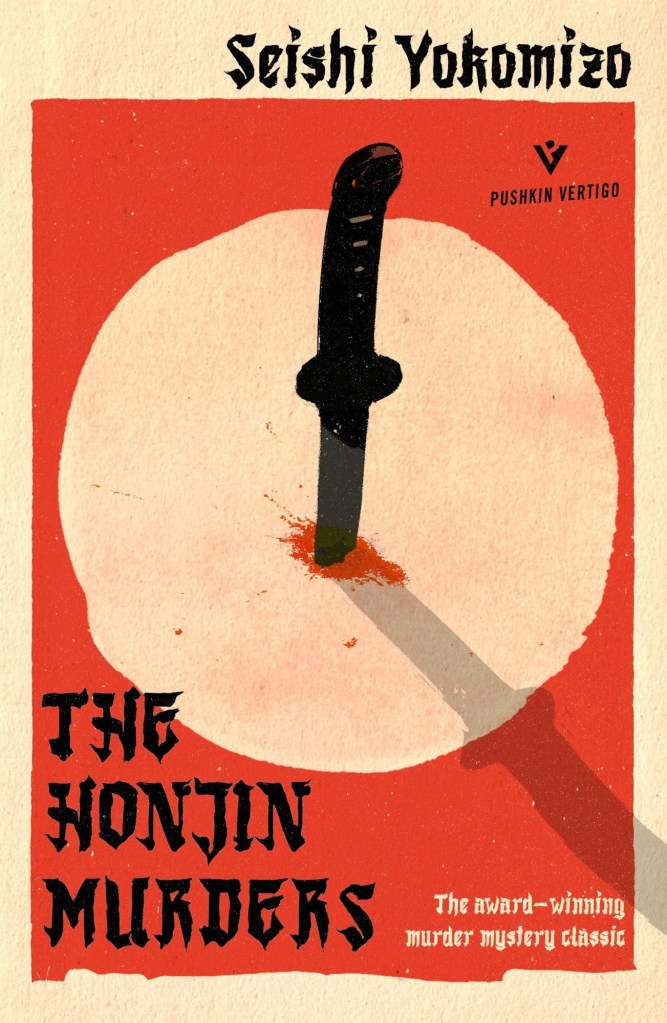
SYNOPSIS:
One of Japan’s greatest classic murder mysteries, introducing their best loved detective.
In the winter of 1937, the village of Okamura is abuzz with excitement over the forthcoming wedding of a son of the grand Ichiyanagi family. But amid the gossip over the approaching festivities, there is also a worrying rumour – it seems a sinister masked man has been asking questions around the village.
Then, on the night of the wedding, the Ichiyanagi household are woken by a terrible scream, followed by the sound of eerie music. Death has come to Okamura, leaving no trace but a bloody samurai sword, thrust into the pristine snow outside the house. Soon, amateur detective Kosuke Kindaichi is on the scene to investigate what will become a legendary murder case, but can this scruffy sleuth solve a seemingly impossible crime?
REVIEW:
I don’t recall ever reading a book that explains everything in such an unusual way as The Honjin Murders. Rather than reading a book, it makes you feel like you’re having a verbal conversation with a person who is narrating a story. And that might sound like an interesting choice of style, but unfortunately, the narrator keeps reminding you certain details, over explaining technical features and inserting their personal opinions in between the facts. This exaggerated orality bothered me for a while because being spoon fed all the details steals some of the mystery from something that should be a mystery novel. After 4-5 chapters, the style tends to change a bit and we only get a reminder of that weird descriptive style now and then.
Now for the good parts. What I normally heavily dislike in any detective books is that the mystery gets suddenly and rapidly solved in the last chapter and we are only left with a quick epilogue. It happened to me pretty often to remember the whole action of a book but to forget almost completely who was the murderer and how the story ended exactly because of this reason. In The Honjin Murders, I absolutely loved the fact that the mystery is solved maybe a quarter before the ending. This way, my brain has time to let the conclusion slowly settle and make the entire story more memorable.
The murder itself is as brilliant as the solving of the puzzle. Both the detective and the criminal are having the same intelectual potential, so the suspense stays at a high level constantly.
Before the protagonist is introduced, the regular police is in charge of the case and the author doesn’t rush that part of the story. This is one aspect that I did not encounter often in other murder mysteries where we are acquainted with a genius detective. I appreciated that the author doesn’t try to minimise the capabilities of the normal police and guides us through the regular steps of an investigation, before finally bringing on the scene the main actor. Even then, the police is still heavily involved and both parties are relying and trusting each other.
The story was intriguing enough and I am probably going to continue the series at some point. I heard that some of the next books are better than this first one so I think it’s worth finding out if that’s true or not. Moreover, it’s probably the first time when I read a Japanese crime author and I’m still curious to discover more of his work, even if this first novel did not really blow my mind.
Discover more from My Weekly Book
Subscribe to get the latest posts sent to your email.

